A horoscope is a chart of the geocentric positions of the planetary bodies at the time of one's birth. The word "horoscope" is derived from the Greek words hora meaning "the hour", and skopos meaning "watcher". It refers to the act of watching for the arrival of a particular moment of time. The ancient practice of watching the position of the zodiac sign rising at the horizon in the sky at the moment of one's birth is based on the tenet that the individual's personality will assume the characteristics of the moment of his genesis.
When astrologers watched the exact degree of the zodiac sign rising at the horizon, they were in fact observing for the Rising Sign. As there are twelve zodiac signs in the sky, the Rising Sign at the horizon changes two-hourly. The Rising Sign has been labelled as "watcher of the hour" in the past. In fact, the earliest meaning of the horoscope was equated with that of the Rising Sign. Today, modern astrology has expanded the defintion of the horoscope to encompass all the planetary information in the birth chart.
In its graphic form, the horoscope is a cartwheel map of the heavens that charts the positions of the Sun, Moon, and planets as they appear at the time of the individual's birth, in relation to a given place on earth. Analyzing the planetary positions and their relationships to each other in the birth chart enables the astrologer to get a glimpse into his natural characer and life potentials.
The earliest form of astrological practice pertains to the characterisation of historical cycles and the fate of nations. Particular attention was paid to famines, natural disasters and wars. In ancient times, astrology was largely a system of celestial omens by which the fate of kingdoms and their rulers could be judged. Modern astrology has since developed the personal horoscope into a study of the individual's character and his relationship with time and the cycles of nature. This discipline has now become an art of understanding how a peron's life path fits into such cycles. In the same way as we use the hour and the minute hands of the clock to correlate with the passing of time, the horoscope can be perceived as a cosmic clock that correlates with the unfolding of our individual life cycles.
Whenever we say an astrologer "casts" a horoscope, we mean that he "freezes" all the positions of the moving planets in the sky at the moment of choice and converts that snapshot into a graphic representation of the heavens. This graphic representation is known as the birth chart. It maps our inner psyche.
The horoscope also charts our life intentions. It starts with the birth chart and thereafter flows with the natural planetary cycles. It shows what we intend to experience and choose to do at different times of our lives. It describes what our potentials are and what shape we give to our individuality as we grow. It guides us to connect with that part of ourselves which we know we will eventually become.
In astrology, the Sun and Moon are regarded as "planets". There are thus ten planets in the horoscope. The "clock" of the horoscope indicates teh timing of the ten planetary cycles. these cycles overlap and start ticking the moment a person is born.
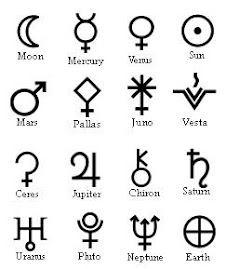
The Sun's yearly cycle indicates a person's will, his being and short term goals. The Moon's monthly cycle depicts his emotional tide. Mercury and Venus cycles are roughly a year long each. Mercury describes his mental disposition and communication patterns whereas Venus paints a picture of his relationship and values. Mars has a two-year cycle that characterizes his drive and medium-term goals. The Jupiter cycle is 12-yearly in duration. It reveals his reward and recognition patterns. The Saturn cycle is even longer, about 29 years. It helps the individual to understand his maturity, responsibilities and challenges in life.
The cycles of the three outer planets are very much longer. A Uranus cycle is 84 years, a Neptune cycle 164 years and a Pluto cycle is 248 years. These three cycles work together in the horoscope and require the individual to let go, to accept and to redefine his life. Each of the three outer planets does that in a different way. Uranus redefines one's life by recognising his individuality, uniqueness and freedom. Neptune however perceives the individuation process as more than just a series of realizations about oneself. It redefines one's life by re-seeing the world through questioning the meaning of life. So, the Neptune cycle is about reality and illusion, aspiration and disappointment. However, a person's spiritual crisis is more than just an issue of the meaning of life. Pluto helps the individual to ask the question: "how much of this is really up to me?". Hence, Pluto in the horoscope symbolizes the individual's struggle with the forces of fate.
Showing posts with label philosophy. Show all posts
Showing posts with label philosophy. Show all posts
Wednesday, March 11, 2009

Thursday, February 19, 2009
Psychological Perspectives in Astrology
Many modern astrologers relate astrology to depth psychology via the work of Carl Jung. As a result of the cross-fertilisation between the two disciplines, Psychological Astrology emerged. This is a modern departure from Traditional Astrology and it is not possible to say exactly when the movement began. The discipline uses astrological archetypes to inform the understanding of an individual's psyche. When Carl Jung was studying the interpretation of dreams, he commonly came across mythical figures whose images correlated with the Greek/Roman gods that were attached to the star patterns mapped out in the skies. He concluded that the heavenly figures in astrology come from the images we make in our minds. Charles Carter encyclopaedia mentioned character traits in 1924. The Swiss astrologer Ernst Kraft urged that astrological symbolism be reportrayed in terms of psychology in 1929 in the hope that the practice of astrology might benefit from the advances being made in depth psychology. By 1950, the Jungians themselves began to lay claim to the planets, probably as a reflection of Jung's own interest in the subject.
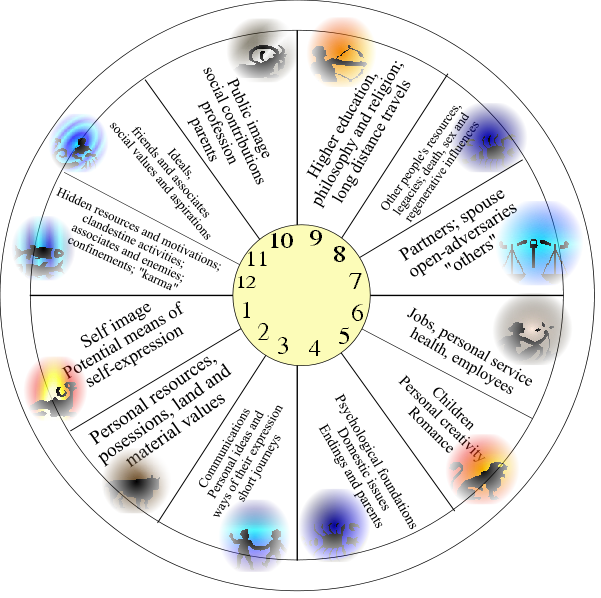
The philosophical premise upon which Psychological Astrology is based is that the individual's reality springs outward from his inner landscape of thoughts, feelings, expectations and beliefs. For instance, in astrological symbolism Saturns represents limitation, restriction and boundaries, whereas the 11th house represents the person's friends, peers and community in his everyday life.
If we take the example of a university student whose natal Saturn is in the 11th house of his birth chart, he is likely to show up as a problem of having trouble with his friends and study mates in his campus life. Yet, in terms of Psychological Astrology, that interpretation may represent just the tip of the iceberg.
Conflict with friends is only an outer manifestation of something which the student himself is responsible for creating. His relationship difficulties with his study companions is the surface manifestation of something much deeper. The deeper psychological issue is probably a fear of expanding his boundaries to include something other than himself. There is likely to be an internal conflict. He may want to become greater individual than what he already is, and yet he is afraid of endangering the identity that he already possesses. Any planet placed in the 11th house in his birth chart will urge him to encompass a greater reality, but his Saturn, being restrictive in archetype, will hold him back mentally and caution him to preserve what he is already familiar or comfortable with.
The student now understands that it is not lousy friendship that is restricting his development. Rather it is his own restrictions which limit his friendship. He then obtains a better insight into his own inner psyche. Rather than telling him "Sorry, your friends are no good", the astrological chart now opens up his growth potential. He now understands that what he sees in life is coloured by what he expects to see. He may then appreciate that difficulties with friends is but a necessary and productive phase of his campus experience, and it would benefit him to grow side by side with his constant challenge of making friends.
In carrying the astrological interpretation further, a knowledge of the sign placement of Saturn often provides useful insight as to why the student might experience difficulty. For instance, the student with the Saturn in Aries in 11th house may experience difficulty in making friends because he is unable to assert himself in a group situation. A Saturn in Taurus may shy away from socialising with friends simply because he is financially thrifty. A Saturn in Gemini suggests that the difficulty may lie with the way he communicates with others. A Saturn in Cancer may find socialising with friends burdens his responsiblities to his family. On the other hand a Saturn in Leo may annoy his peers too much because he does not want to play "second fiddle" to anyone else. For a Virgoan Saturn, his group mates may find him too serious and worrisome with regards to small matters.
Sometimes, a Saturn in Libra may provide us with the clue that the student harbours an inferiority complex that limits his interaction with people. The student with Saturn in Scorpio may be too demanding of others in terms of responsiblity and overwhelms his groups mates who do not want to carry their share of the load. The student with Saturn in Sagittarius may clash with his friends in terms of religious or philosophical differences. The student with Saturn in Capricorn mistrusts others' ability to live up to his standards and therefore unable to delegate responsibilities during group work. The student with Saturn in Uranus may strike his group mates as being too offbeat and unconventional in his ideas whereas the student with Saturn in Pisces may be too sensitive, too paranoid and too gloomy to attract his friends' company.
The philosophical premise upon which Psychological Astrology is based is that the individual's reality springs outward from his inner landscape of thoughts, feelings, expectations and beliefs. For instance, in astrological symbolism Saturns represents limitation, restriction and boundaries, whereas the 11th house represents the person's friends, peers and community in his everyday life.
Saturn (restriction) + 11th House (friends) = Difficulty Making Friends
If we take the example of a university student whose natal Saturn is in the 11th house of his birth chart, he is likely to show up as a problem of having trouble with his friends and study mates in his campus life. Yet, in terms of Psychological Astrology, that interpretation may represent just the tip of the iceberg.
Conflict with friends is only an outer manifestation of something which the student himself is responsible for creating. His relationship difficulties with his study companions is the surface manifestation of something much deeper. The deeper psychological issue is probably a fear of expanding his boundaries to include something other than himself. There is likely to be an internal conflict. He may want to become greater individual than what he already is, and yet he is afraid of endangering the identity that he already possesses. Any planet placed in the 11th house in his birth chart will urge him to encompass a greater reality, but his Saturn, being restrictive in archetype, will hold him back mentally and caution him to preserve what he is already familiar or comfortable with.
The student now understands that it is not lousy friendship that is restricting his development. Rather it is his own restrictions which limit his friendship. He then obtains a better insight into his own inner psyche. Rather than telling him "Sorry, your friends are no good", the astrological chart now opens up his growth potential. He now understands that what he sees in life is coloured by what he expects to see. He may then appreciate that difficulties with friends is but a necessary and productive phase of his campus experience, and it would benefit him to grow side by side with his constant challenge of making friends.
In carrying the astrological interpretation further, a knowledge of the sign placement of Saturn often provides useful insight as to why the student might experience difficulty. For instance, the student with the Saturn in Aries in 11th house may experience difficulty in making friends because he is unable to assert himself in a group situation. A Saturn in Taurus may shy away from socialising with friends simply because he is financially thrifty. A Saturn in Gemini suggests that the difficulty may lie with the way he communicates with others. A Saturn in Cancer may find socialising with friends burdens his responsiblities to his family. On the other hand a Saturn in Leo may annoy his peers too much because he does not want to play "second fiddle" to anyone else. For a Virgoan Saturn, his group mates may find him too serious and worrisome with regards to small matters.
Sometimes, a Saturn in Libra may provide us with the clue that the student harbours an inferiority complex that limits his interaction with people. The student with Saturn in Scorpio may be too demanding of others in terms of responsiblity and overwhelms his groups mates who do not want to carry their share of the load. The student with Saturn in Sagittarius may clash with his friends in terms of religious or philosophical differences. The student with Saturn in Capricorn mistrusts others' ability to live up to his standards and therefore unable to delegate responsibilities during group work. The student with Saturn in Uranus may strike his group mates as being too offbeat and unconventional in his ideas whereas the student with Saturn in Pisces may be too sensitive, too paranoid and too gloomy to attract his friends' company.
Sunday, February 15, 2009
What is an Astrological Archetype?
The word "archetype" is derived from the Greek word archetypon which is made up of two root words. Arkhe means "first or original" and typos means "a model or a type". So the word archetype basically means an original model after which similar things are patterned. The concept of the archetype dates back to the time of the ancient Greeks. Plato's ideas for example were pure mental forms and they embodied the fundamental characteristics of a thing rather than its specific uniqueness.
Archetypes can be applied to many areas of life. In particular, the concept of psychological archetypes was advanced by Carl Jung, a Swiss psychiatrist in the early part of the 20th century. His notion of an archetype is that it is an innate, universal prototype for an idea which may be used to interpret observations. He considered archetypes as psychological organs that are analogous to physical organs in that both are morphological constructs that came about through evolution.
Jung has shown that archetypes are the primary life-motivating agents in the individual human psyche as well as in the overall psychological patterns of entire cultures. These archetypes are inherent in the psychological layer of human life and Jung called this psychic substratum the "collective unconscious".
Each person has an unconscious. Part of it is very personal and part of it is shared by all human beings. The personal unconscious is the part that contains personal memories and experiences that have been forgotten or repressed. The rest belongs to the collective unconscious which is a shared domain. This is simply that part of the unconscious that does not come from personal experience. This is also where archetypes are supposedly stored.
Jung believes that archetypes exist and remain in some kind of a human awareness independent of time and space. The collective unconscious in humans is something like an imprint, along the same lines as animal instincts. In animals, instincts tend to adapt and progress as evolution takes place because their needs change in response to changing forces in their environment. Human instinct is believed to undergo a similar process of evolution. The collective unconscious of humans is considered a more refined set of instincts and is filled with archetypes.
Within the collective unconscious, archetypes function as universal principles underlying the motivating force of psychological life. In both astrology and mythology these universal principles constitute the main field of study. The main difference is that in mythology the emphasis is on the various patterns of cultural manifestations of the archetypes whereas in astrology the essential archetypal principles themselves are used as language for understanding the fundamental forces and patterns in both individual and cultural life.
What then are universal principles? Many scientists believe that there is an invisible formative tendency or organizing principle within living things. Form is one of the oldest ideas of mankind. In the Middle Ages, each class of things was said to possess an essence, and essence is considered a source of activity. To understand anything one must penetrate sufficiently its essence or the ultimate pattern in which formless energy is organised into functional wholes. This formal pattern of the whole is always seen to determine the properties of its constituents.
In astrology, every individual is considered a whole with a unique expression of universal principles, patterns and energies. The zodiac was considered by ancient astrologers and philosophers as the soul of nature in that it gives form and order to life. Astrology is the language through which universal principles are expressed. It is also a way of perceiving form and order in the life of an individual person and it works by symbolizing each individual's oneoness with universal factors.
One of astrology's greatest value is that through an understanding of the universal forces operating in each of us, we can better understand the universal principles of life itself. While Science accepts fingerprints, electrocardiograms, electroencephalograms and genetic sequences as unique representations of physical energies, patterns and rythms, astrology uses the birth-chart as the tool to understand personal energies and rythms, and how they operate through the individual. No matter what label is used to designate these universal principles, the fact remains that such forces influence each of us from within and from without, and are best expressed through the vehice of archetypes.
Since archetypes are the foundation of all psychic life, they can be too subtle for immediate conscious comprehension. Therefore it becomes important that we have a language to describe their reality and understand how they function and what they mean to us. There is only one type of science that deals with such forces, and it is astrology.
Archetypes can be applied to many areas of life. In particular, the concept of psychological archetypes was advanced by Carl Jung, a Swiss psychiatrist in the early part of the 20th century. His notion of an archetype is that it is an innate, universal prototype for an idea which may be used to interpret observations. He considered archetypes as psychological organs that are analogous to physical organs in that both are morphological constructs that came about through evolution.
Jung has shown that archetypes are the primary life-motivating agents in the individual human psyche as well as in the overall psychological patterns of entire cultures. These archetypes are inherent in the psychological layer of human life and Jung called this psychic substratum the "collective unconscious".
Each person has an unconscious. Part of it is very personal and part of it is shared by all human beings. The personal unconscious is the part that contains personal memories and experiences that have been forgotten or repressed. The rest belongs to the collective unconscious which is a shared domain. This is simply that part of the unconscious that does not come from personal experience. This is also where archetypes are supposedly stored.
Jung believes that archetypes exist and remain in some kind of a human awareness independent of time and space. The collective unconscious in humans is something like an imprint, along the same lines as animal instincts. In animals, instincts tend to adapt and progress as evolution takes place because their needs change in response to changing forces in their environment. Human instinct is believed to undergo a similar process of evolution. The collective unconscious of humans is considered a more refined set of instincts and is filled with archetypes.
Within the collective unconscious, archetypes function as universal principles underlying the motivating force of psychological life. In both astrology and mythology these universal principles constitute the main field of study. The main difference is that in mythology the emphasis is on the various patterns of cultural manifestations of the archetypes whereas in astrology the essential archetypal principles themselves are used as language for understanding the fundamental forces and patterns in both individual and cultural life.
What then are universal principles? Many scientists believe that there is an invisible formative tendency or organizing principle within living things. Form is one of the oldest ideas of mankind. In the Middle Ages, each class of things was said to possess an essence, and essence is considered a source of activity. To understand anything one must penetrate sufficiently its essence or the ultimate pattern in which formless energy is organised into functional wholes. This formal pattern of the whole is always seen to determine the properties of its constituents.
In astrology, every individual is considered a whole with a unique expression of universal principles, patterns and energies. The zodiac was considered by ancient astrologers and philosophers as the soul of nature in that it gives form and order to life. Astrology is the language through which universal principles are expressed. It is also a way of perceiving form and order in the life of an individual person and it works by symbolizing each individual's oneoness with universal factors.
One of astrology's greatest value is that through an understanding of the universal forces operating in each of us, we can better understand the universal principles of life itself. While Science accepts fingerprints, electrocardiograms, electroencephalograms and genetic sequences as unique representations of physical energies, patterns and rythms, astrology uses the birth-chart as the tool to understand personal energies and rythms, and how they operate through the individual. No matter what label is used to designate these universal principles, the fact remains that such forces influence each of us from within and from without, and are best expressed through the vehice of archetypes.
Since archetypes are the foundation of all psychic life, they can be too subtle for immediate conscious comprehension. Therefore it becomes important that we have a language to describe their reality and understand how they function and what they mean to us. There is only one type of science that deals with such forces, and it is astrology.
Friday, February 13, 2009
How do we define Astrology?
As intellectuals we place a lot of emphasis on the clarity of definitions, and the question of "What exactly is Astrology?" often comes up in a discussion.
Well, the active ingredient in Astrology is that it is a study of natural cycles, and we can use that as a working definition. Why then do we want to study cycles? The simple answer is that cycles are an inherent part of our life and an everyday phenomenon in our existence.
The physiology of the human body is characterised by numerous cycles. We all experience alternate cycles of wakefulness and sleep. The heart has an intrinsic rhythm consisting of electrical activity and the way it pumps blood to the body follows a regular cycle. So does the way we breathe. We have a similar respiratory cycle that inhales oxygen and gets rid of carbon dioxide and maintains the level of our blood gases to narrowly regulated limits. The female gender in particular are well aware of their monthly menstrual cycles and their ovulation cycles. At our organ level the epithelial lining of our intestines goes through regular cycles of shedding, desquamation and regeneration. At a cellular level, our carbohydrate metabolism goes through a Citric Acid Cycle. Our individual body cells replicate according to a DNA cycle.
Cyclical phenomena abound in our environment. We live in four seasons. Tides rise and fall according to the cycles of the Moon. So do the psychical behaviour of inmates in mental assylums. Business students are familiar with business cycles, which refer to fluctuations in business activities around a growth trend of a country. Farmers can tell us about their planting cycles - from the ploughing of the land, planting of the seed, flowering, harvesting of the fruit to the re-preparation of land and soil for the next planting cycle. Economics students know of Kondratieff long waves which describe the cycles of economic bust and boom that last 50-60 in duration. Throughout the history of mankind kingdoms flourish and perish, and civilizations rise and fall in a cyclical manner.
Astrology in fact helps us to study all these natural phenomenon through the cyclical movements of planets in the heavens. It seeks meaning in everything in the environment around us. It leverages on the symbolic messages encoded in the celestial bodies to help us to derive meanings as to what happens on earth. This in essence is the knowledge of Astrology. It has helped to explain many natural phenomenon and able to predict natural disasters e.g. earthquakes, weather changes.
Then the Scientific revolution came along and proposed the experimental approach as the most robust basis for deriving knowledge. As soon as man is able to find a scientific explanation or a logical basis of certain astrological phenomena, that part of the knowledge gets carved out and renamed. Astronomy, for instance was splitted off from Astrology, especially after the invention of the telescope, and thereafter enjoys itself as a scientific knowledge discipline. Likewise, Meterology becomes a discipline on its own, as Science is able to contribute more precise instrumentation for measuring natural cycles and able to predict weather changes and earthquakes. What remain of the knowledge domain of Astrology today are unfortunately those areas that man has yet to be able to find explanations from the scientific perspective. This is how epistemology works. Hence modern Astrology continues to appear mystical and intriguing to us but this should not stop us from continuing to rediscover what we can learn from man's ancient wisdom.
Well, the active ingredient in Astrology is that it is a study of natural cycles, and we can use that as a working definition. Why then do we want to study cycles? The simple answer is that cycles are an inherent part of our life and an everyday phenomenon in our existence.
The physiology of the human body is characterised by numerous cycles. We all experience alternate cycles of wakefulness and sleep. The heart has an intrinsic rhythm consisting of electrical activity and the way it pumps blood to the body follows a regular cycle. So does the way we breathe. We have a similar respiratory cycle that inhales oxygen and gets rid of carbon dioxide and maintains the level of our blood gases to narrowly regulated limits. The female gender in particular are well aware of their monthly menstrual cycles and their ovulation cycles. At our organ level the epithelial lining of our intestines goes through regular cycles of shedding, desquamation and regeneration. At a cellular level, our carbohydrate metabolism goes through a Citric Acid Cycle. Our individual body cells replicate according to a DNA cycle.
Cyclical phenomena abound in our environment. We live in four seasons. Tides rise and fall according to the cycles of the Moon. So do the psychical behaviour of inmates in mental assylums. Business students are familiar with business cycles, which refer to fluctuations in business activities around a growth trend of a country. Farmers can tell us about their planting cycles - from the ploughing of the land, planting of the seed, flowering, harvesting of the fruit to the re-preparation of land and soil for the next planting cycle. Economics students know of Kondratieff long waves which describe the cycles of economic bust and boom that last 50-60 in duration. Throughout the history of mankind kingdoms flourish and perish, and civilizations rise and fall in a cyclical manner.
Astrology in fact helps us to study all these natural phenomenon through the cyclical movements of planets in the heavens. It seeks meaning in everything in the environment around us. It leverages on the symbolic messages encoded in the celestial bodies to help us to derive meanings as to what happens on earth. This in essence is the knowledge of Astrology. It has helped to explain many natural phenomenon and able to predict natural disasters e.g. earthquakes, weather changes.
Then the Scientific revolution came along and proposed the experimental approach as the most robust basis for deriving knowledge. As soon as man is able to find a scientific explanation or a logical basis of certain astrological phenomena, that part of the knowledge gets carved out and renamed. Astronomy, for instance was splitted off from Astrology, especially after the invention of the telescope, and thereafter enjoys itself as a scientific knowledge discipline. Likewise, Meterology becomes a discipline on its own, as Science is able to contribute more precise instrumentation for measuring natural cycles and able to predict weather changes and earthquakes. What remain of the knowledge domain of Astrology today are unfortunately those areas that man has yet to be able to find explanations from the scientific perspective. This is how epistemology works. Hence modern Astrology continues to appear mystical and intriguing to us but this should not stop us from continuing to rediscover what we can learn from man's ancient wisdom.
Subscribe to:
Posts (Atom)